Cameras

LDX 100 Series

Introducing the Next Generation of Premium Live Image Capture

LDX 100 Series

Redefining Broadcast Camera Performance

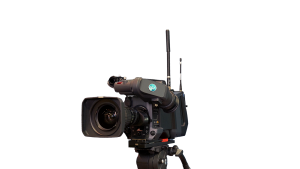
The LDX 100 Series from Grass Valley delivers groundbreaking advancements in broadcast camera technology. Designed for high-performance production environments, these cameras combine exceptional image quality with innovative features, enabling broadcasters to capture dynamic content with unmatched precision and creativity.

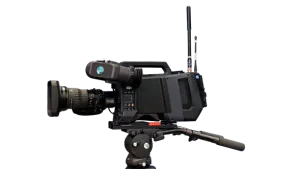
LDX 100 close

Enhanced Workflow Integration

The LDX 100 Series cameras are equipped with advanced connectivity options, ensuring seamless integration into existing production workflows while enabling new workflow possibilities and enhancing cross-team collaboration.

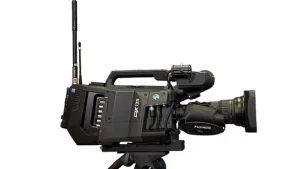
LDX 135 rear close

User-Centric Interface

The intuitive controls and customizable settings allow operators to adapt the camera’s functionality to their specific needs, streamlining the shooting process and enhancing overall productivity.
LDX_135_close

Enhanced Operator Control

Intuitive controls and customizable settings let operators tailor the camera to their specific needs. Combined with the integrated lens zoom control in the handgrip, this streamlines operation and boosts overall productivity.

Features

Superior Image Quality

The LDX 100 Series cameras utilize advanced imaging sensors that provide exceptional detail, vibrant colors, and superior low-light performance. With a global shutter always operating, they consistently deliver the highest quality in every shot.

Flexible Operational Modes

The LDX 100 Series adapts to diverse production needs, supporting multiple formats—including HDR, 4K, and HD—simultaneously. With integrated LUT-based HDR-to-SDR conversion, it ensures seamless transitions between production standards.

Robust and Flexible Design

Built with an adaptable architecture, these cameras allow easy function expansion through software options—both permanently and daily. This ensures long-term versatility and readiness for future production demands.

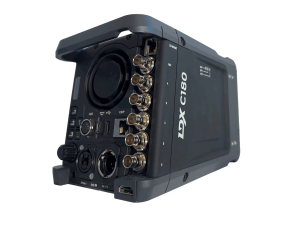
LDX C180 camera

NEW LDX 180

Drama at the speed of Live

The LDX 180 brings an entirely new dimension to live storytelling, adding cinematic depth that elevates every close-up, every moment, and every emotional beat. It invites your audience deeper into the action, blending filmic intimacy with the immediacy of live production. And because it’s part of the LDX 100 Series, it integrates seamlessly into your existing setup, sharing accessories, transmission systems, and workflows for effortless production continuity.

Designed to Capture Every Detail

At the heart of the LDX 180 is Grass Valley’s in-house designed Super 35 Xenios CMOS imager, delivering true Global Shutter performance and oversampled UHD resolution. Paired with a PL mount, it supports the most iconic cinematic lenses, enabling productions to combine artistry with precision in fast-paced environments.

One Story. One Look. Full Control.

With Creative Grading, the LDX 180 is controlled in perfect sync with the rest of your Grass Valley camera lineup, allowing you to maintain one consistent visual story from every angle. The rich, intuitive interface gives operators full access to every parameter. Not through numbers, but through visual feedback, unlocking the full creative potential of your cameras, even in the most challenging lighting and production environments.

View Datasheet

The LDX Line

Explore the different models below to determine which best suits your production needs.

LDX 180

Bringing Cinematic Depth into Media Production Workflows​

  • In-house developed S35 CMOS imager with global shutter and PL-mount​
  • Filmic shallow depth of field - Drama at the speed of Live
  • Familiar LDX look and feel
  • And all the benefits of a common shading platform alongside your existing LDX solution
  • Fully compatible with LDX 100 Series cameras
  • Available Q4 2025​
Datasheet
LDX C180

LDX C180

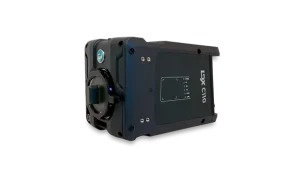
Bringing Cinematic Depth into Media Production Workflows in a compact camera

  • Same feature set and format support as the LDX 180, but in a smaller form factor
  • Unique connectivity options for a compact camera, including XCU connectivity and Native IP
  • An ideal solution for cable cams, Steadicam, and pan/tilt head operations
Datasheet

LDX 150

The ultimate expert in high-speed operation

  • Three 2/3” CMOS imagers with a prism beam splitter
  • High sensitivity and excellent signal-to-noise ratio ensuring superior image quality and improved depth of field control
  • Natively supports all HDR standards with outstanding dynamic range and integrated LUT processing for SDR conversion
  • Supports UHD at 1x to 3x speed and HD at up to 6x speed
  • Native IP connectivity with an optional JPEG XS high-quality, low-latency compression
Datasheet

LDX 150 RF

The expert in high-speed wireless operation

  • Same feature set, format support, and image performance as the LDX 150, optimized for Wireless applications
  • The perfect companion to the LDX 135 and LDX 150 for all wireless applications
  • A universal interface enables seamless integration with third-party wireless transmission solutions
Datasheet

LDX C150

Redefining power and performance in a compact camera

  • Same feature set and format support as the LDX 150, but in a smaller form factor
  • Unique connectivity options for a compact camera, including XCU connectivity and Native IP
  • An ideal solution for cable cams, Steadicam, and pan/tilt head operations
Datasheet

LDX 135

The top performer in single-speed operation

  • Same feature set, connectivity, and image performance as the LDX 150
  • The perfect companion to the LDX 150 for all single-speed formats
  • A cost-efficient solution for camera positions that do not require high-speed operation
Datasheet

LDX 135 RF

The ultimate expert in wireless operation

  • Same feature set, format support, and image performance as the LDX 135, optimized for wireless applications
  • The perfect companion to the LDX 135 and LDX 150 for all wireless camera applications
  • A universal interface enables seamless integration with third-party wireless transmission solutions
Datasheet

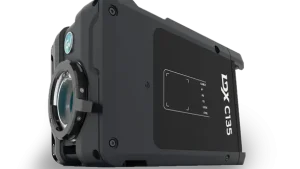
LDX C135

Unmatched single-speed performance in a compact camera

  • Same feature set and format support as the LDX 135, but in a smaller form factor
  • Unique connectivity options for a compact camera, including XCU connectivity and Native IP
  • An ideal solution for cable cams, Steadicam, and pan/tilt head operations
Datasheet

LDX 110

Premium quality in an entry-level broadcast camera

  • Single 2/3” CMOS imagers with a Bayer pattern color filter
  • High sensitivity and good signal-to-noise ratio ensuring superior image quality and improved depth of field control
  • Natively supports all HDR standards with outstanding dynamic range and integrated LUT processing for SDR conversion
  • Supports UHD at 1x speed and HD at up to 3x speed*1 (*1 3x speed is a future option)
Datasheet
LDX 110 RF

LDX 110 RF

Affordable wireless operation without compromise

  • Same feature set, format support, and image performance as the LDX 110, optimized for Wireless applications
  • The perfect companion to the LDX 110 for all wireless applications
  • A universal interface enables seamless integration with third-party wireless transmission solutions
Datasheet

LDX C110

Superior quality packed into an entry-level compact camera

  • Same feature set and format support as the LDX 110, but in a smaller form factor
  • Flexible connectivity options for a compact camera, including XCU connectivity
  • An ideal solution for cable cams, Steadicam, and pan/tilt head operations
Datasheet

The LDX 100 Line

Explore the different models below to determine which best suits your production needs.

ModelLDX 110 / LDX C110LDX 135 / LDX C135 * / **LDX 150 / LDX C150 */ **LDX 180 **
Imager1x 2/3"3x 2/3”3x 2/3”1 x S35
Global ShutterYesYesYesYes
Lens mountB4B4B4PL
Pixel count8.3M24.8M24.8M51.8M (10K imager)
Speed support1x UHD / 3x HD1x UHD / 1x HD3x UHD / 6x HD1x UHD / 1x HD
XCU connectionYesYesYesYes
DirectIPOptionOptionOptionOption
NativeIPNoOptionOptionOption
JPEG XSNoOptionOptionOption
SummaryCost-efficient solution with up to 3x speed HD operationHighest performance for all single-speed applicationsHighest performance for all highspeed applicationsFilmic look in all live applications

* Perfect “twins” for high-end live productions
** Perfect “triple” for high-end live productions with filmic look at some positions

Awards

Recent awards for our LDX 100 Series cameras

Frequently Asked Questions

Explore the 5 frequently asked questions that provide further insights into essential aspects of camera technology in broadcasting and cinematography

What is Depth of Field and What Factors Influence It?

Depth of Field (DoF) in a camera system is primarily influenced by the lens iris and the focal length, where the focal length required for a given viewing angle depends on the size of the image sensor. A wider (more open) iris decreases DoF, and a longer focal length also reduces DoF; however, these adjustments are often limited by fixed object distances and the narrow optimal aperture range, especially in UHD systems. In practice, sensor size plays a key role—larger sensors (e.g., the S35 imager in the LDX 180) result in a shallower DoF compared to smaller sensors (e.g., 2/3” in the LDX 110/135/150) under the same shooting conditions.

How Do Broadcast and Cinematography Lenses Differ?

Broadcast and cinematography lenses differ primarily in image size compatibility, lens mounts, and control systems. Broadcast lenses use the B4-mount for 2/3” imagers and have built-in controls, while cinematography lenses—typically PL-mount for larger S35 or full-frame sensors—often lack integrated controls. Optical converters to use B4 lenses on S35 cameras reduce sensitivity by about 2.5 f-stops and compromise resolution, making them unsuitable. For live use on S35 cameras, PL-mount lenses with built-in servo controls are the recommended solution.

What Are the Advantages of a Single UHD Imager Compared to 3x HD Imagers?

A single UHD imager provides superior resolution and image sharpness compared to a three HD imager setup, especially in UHD operation, where the single imager delivers native resolution while the three-imager system relies on up-conversion. In HD mode, the UHD imager also benefits from green channel oversampling, resulting in better sharpness and reduced need for digital enhancement. However, in LED wall applications, single UHD imagers are more susceptible to colored moiré artifacts due to the uneven distribution of color pixels, requiring carefully designed optical low-pass filters—whereas three-HD-imager systems typically produce less disruptive, monochrome moiré.

How Can Simultaneous HDR/SDR Live Productions Be Optimized?

For simultaneous HDR/SDR live productions, the optimal workflow combines native HDR operation, high-bit-depth look control, and built-in LUT processing for accurate HDR-to-SDR conversion. Native operation in BT.2100 formats (HLG and PQ) ensures uncompromised 10-bit image quality, avoiding degradation from format conversions. Applying look control within the camera's high-bit-depth processing and using 33x33x33 LUTs matching those at the production output ensures consistent SDR signals for shading, ISO feeds, and delivery.

What Are the Differences Between Wireless Cameras Using RF and 5G Technologies?

Broadcast RF solutions use dedicated point-to-point transmission over reserved frequency bands and remain reliable for high-end productions. But they are complex, costly, and limited by bandwidth and regional regulations. In contrast, broadcast 5G solutions offer more flexible and scalable wireless camera integration, enabling direct streaming into software-based production platforms and supporting remote workflows. 5G can operate over public networks, local networks, or sliced public networks, making it a versatile option for a wider range of broadcast applications.

Range of LDX cameras